


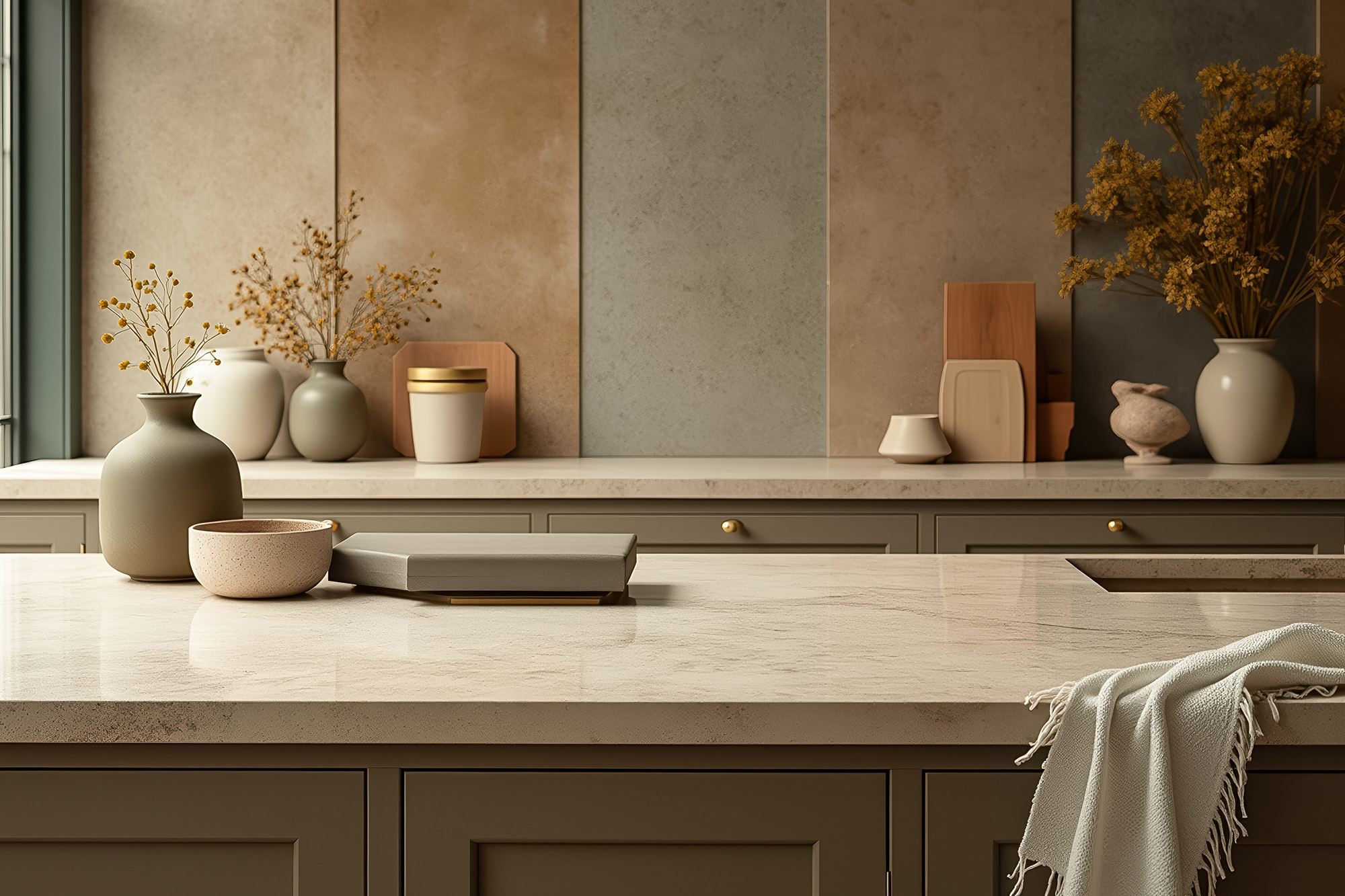
A kitchen remodel can start with a simple vision and quickly become a long list of decisions. Cabinets, appliances, lighting, backsplash, flooring and countertops all compete for space in the budget. Because the countertop is one of the most visible and frequently used parts of the kitchen, getting its cost estimate right early can help you make smarter choices throughout the project.
For San Diego homeowners, countertop pricing can vary significantly depending on the material, amount of surface area, edge details, cutouts and installation requirements. Understanding those variables makes it much easier to compare options and build a realistic kitchen remodel budget.
Start With the Amount of Countertop You Need
The first step in estimating countertop cost is determining how much surface area your kitchen requires. Countertops are commonly priced by the square foot, so measurements provide the foundation for your estimate. Measure the length and depth of each countertop section, then calculate the square footage. If you have an island, measure it separately. Add the individual sections together to get your approximate total.
Remember that a kitchen countertop is not always a simple rectangle. Islands, peninsulas, angled sections and unusual layouts can affect the amount of material needed. A professional measurement is especially valuable before you make a final purchase decision. CTF Depot offers on-site measurements and estimates as part of its remodeling services, which can help account for the actual dimensions of your kitchen rather than relying entirely on preliminary measurements.
Compare Materials Before Setting Your Budget
Material selection is one of the biggest factors affecting countertop cost. A budget-friendly laminate surface will have a very different price from premium natural stone or quartz. Quartz, granite, marble, quartzite, porcelain and other materials each have different price points and characteristics. For example, current San Diego remodeling estimates commonly place laminate toward the lower end of countertop pricing, while quartz and natural stone occupy higher price ranges.
That does not mean the most expensive material is automatically the best choice. Think about how you use your kitchen. A busy household may place greater value on easy maintenance and everyday durability, while another homeowner may prioritize the natural variation of a stone surface. CTF Depot's countertop selection includes quartz, porcelain and natural stone options such as granite, travertine and marble.
Account for Cutouts, Edges and Design Details
Your countertop cost estimate should include more than the material itself. Sink cutouts, cooktop openings, backsplash details and edge profiles can all affect fabrication and installation. A large island with a specialty edge or waterfall design may require substantially more fabrication than a straightforward countertop run.
The number and type of seams can also matter, particularly when working with large surfaces or materials with distinctive patterns. If you want the veining on a stone countertop to line up across multiple sections, material selection and fabrication may require additional planning. This is why a basic price-per-square-foot calculation should be treated as a starting point rather than a final quote.
Consider the Countertop as Part of the Whole Kitchen Remodel
One common budgeting mistake is choosing countertops independently from the rest of the kitchen. Your countertop interacts visually with your cabinets, backsplash, flooring and appliances, so the material needs to make sense within the entire design. For example, a heavily patterned stone may become the focal point of a kitchen with simple cabinetry.
A quieter countertop can work well if you already have statement tile, decorative cabinets or distinctive flooring. San Diego kitchens also benefit from a strong connection between indoor living areas and outdoor spaces. That makes a cohesive material palette particularly useful in homes designed around open, comfortable living. Current local design trends are also moving toward warmer woods, natural-looking materials and softer neutral palettes rather than the cooler gray combinations that dominated earlier years.
Build a Realistic Countertop Allowance
Once you know the approximate square footage, material category and design details, you can create a more useful countertop budget.
A simple starting formula is:
Estimated countertop cost = countertop square footage × material cost per square foot + fabrication + installation + additional details
Then leave some room for changes. Your final measurements may differ from the initial estimate, and a material upgrade can affect the rest of the kitchen budget. It is also smart to think about countertops alongside cabinetry.
Cabinets often represent one of the largest portions of a full kitchen remodel, so choosing a countertop before understanding the broader budget can make it harder to balance the project. If you're planning a full kitchen remodel, the goal isn't simply to find the cheapest countertop. It's to find a surface that fits your budget, design and everyday routine without forcing compromises elsewhere.
Plan Your Countertop Selection With the Whole Project in Mind
A good countertop estimate gives you more than a number. It helps you understand where your money is going and which design choices matter most. If you're planning a kitchen remodel in the San Diego area, visit our showroom to explore countertop and flooring options in person.
At Carpet Tile & Flooring Depot, the team can help you compare materials and plan your selections for your project in San Diego, CA or the surrounding Temecula, Mira Mesa, Chula Vista, and La Mesa, CA. Contact us today to get started, and visit our showroom at San Diego, CA - Miramar Rd., San Diego, CA - Morena Blvd to see your options firsthand.


