


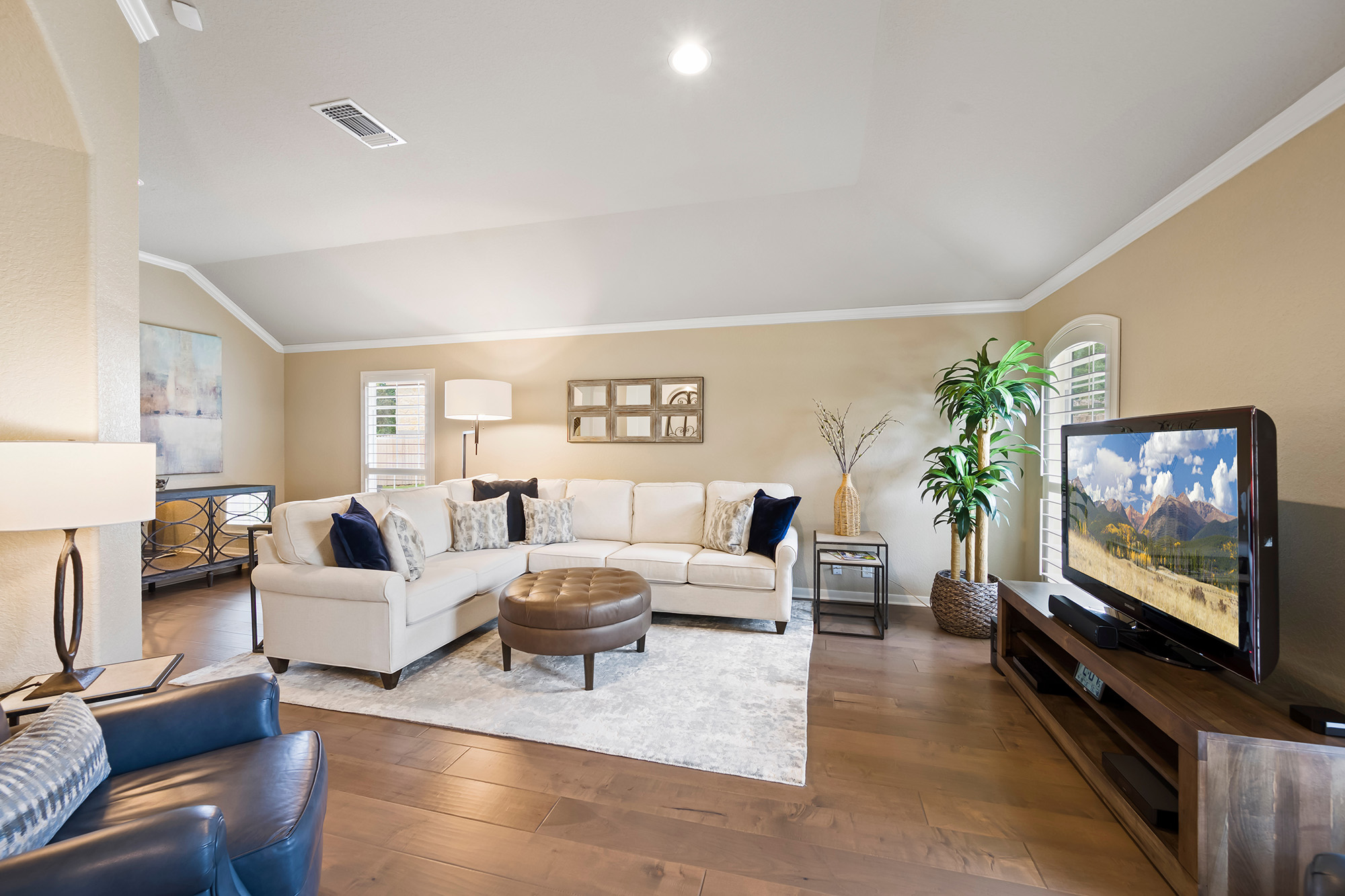
Hardwood flooring can completely influence the feel of a room, but choosing the species and color is only part of the decision. You also need to decide how the floor will be finished. Prefinished hardwood flooring arrives with its finish already applied, while unfinished hardwood is installed first and finished on-site. Both approaches can produce beautiful results. The better choice depends on your installation priorities, the look you want and how much customization you need.
What Makes Prefinished Hardwood Different?
Prefinished hardwood flooring is manufactured, sanded and finished before it reaches your home. The boards arrive ready to install, which can simplify the installation process and reduce the amount of finishing work required inside the house. One of the biggest advantages is consistency. The factory-applied finish is produced under controlled conditions, giving the boards a uniform appearance and finish.
Installation can also be more convenient because there is no need to sand and finish the entire floor after the boards are installed. That can mean less disruption during a remodeling project. Prefinished floors are particularly appealing when you want a relatively straightforward hardwood installation and already know the color, sheen and board style you want.
When Does Unfinished Hardwood Make More Sense?
Unfinished hardwood gives you greater control after installation. The boards are installed in their unfinished state, then sanded and finished on-site. That process allows the flooring to be customized more extensively. You can choose the stain color and finish sheen after seeing the wood installed in the room, which can be helpful when you're coordinating the floor with cabinets, walls, countertops or other finishes.
Another advantage is the ability to create a more uniform finished surface across the entire installation. With unfinished hardwood, the boards are sanded after installation, rather than retaining the slight bevels or finish characteristics of factory-finished planks. The tradeoff is time. On-site sanding and finishing add steps to the hardwood installation process and require more planning around the space while the work is being completed.
Think About Your Home's Design Before Choosing
The difference between prefinished and unfinished hardwood isn't simply about installation. It can influence the final design. Prefinished hardwood flooring comes in a wide range of colors, textures, widths and finishes, making it easier to find a style that works with an existing interior. It can be especially convenient when you're replacing flooring in a finished home and want to minimize the disruption associated with installation.
Unfinished hardwood is useful when customization is a priority. If you're creating a specific look across connected rooms, matching the floor to other wood elements can be easier when you have more control over the finishing stage. San Diego's generally mild climate and strong indoor-outdoor lifestyle also make cohesive flooring choices useful in open-concept homes. If hardwood runs from a living space into dining or entertaining areas, consider how the color and finish will relate to the rest of the home rather than choosing a floor in isolation.
How 2026 Hardwood Trends Fit Into the Decision
Hardwood flooring trends in 2026 continue to favor natural-looking finishes and warmer, more organic interiors. Current San Diego design discussions are also pointing toward warmer wood tones, white oak-inspired looks and natural variation instead of the cooler gray palettes that were once dominant. That trend does not necessarily favor one finishing method over the other.
Prefinished hardwood can give you access to contemporary colors and textures without requiring on-site finishing. Unfinished hardwood can be useful if you want a very specific tone or need to coordinate the finished floor with an existing design. Instead of choosing based solely on what's trending, consider whether you want a floor that is ready to install or one that can be customized as part of the installation process.
Compare the Installation Experience
Your project schedule can make the decision easier. If minimizing disruption is a priority, prefinished hardwood is often attractive because the finishing process has already been completed. The installation team can focus on getting the boards installed rather than sanding, staining and finishing the floor inside your home.
Unfinished hardwood requires additional steps, including sanding and finishing after installation. That can provide a highly customized result, but it also means more time and preparation. Your subfloor condition, room layout and existing flooring should also be evaluated before making the decision. A professional flooring assessment can help determine which approach fits your project.
Choose the Finish That Fits Your Priorities
There isn't a universal winner between prefinished and unfinished hardwood. Prefinished flooring is a strong option when convenience, consistency and a simpler installation process matter most. Unfinished hardwood makes sense when customization and a site-finished appearance are higher priorities.
CTF Depot offers hardwood flooring along with other flooring categories, including laminate, tile and luxury vinyl, allowing you to compare options for different areas of your home.Visit our showroom to see hardwood flooring options in person and discuss your project with a flooring professional. Whether you're updating one room or planning a larger remodel in San Diego, CA or the surrounding Temecula, Mira Mesa, Chula Vista, and La Mesa, CA, contact us today and visit our showroom at San Diego, CA - Miramar Rd., San Diego, CA - Morena Blvd to get started.


